Biodiversity research, giant cookie-cutter style
Making a habitat ready for transport
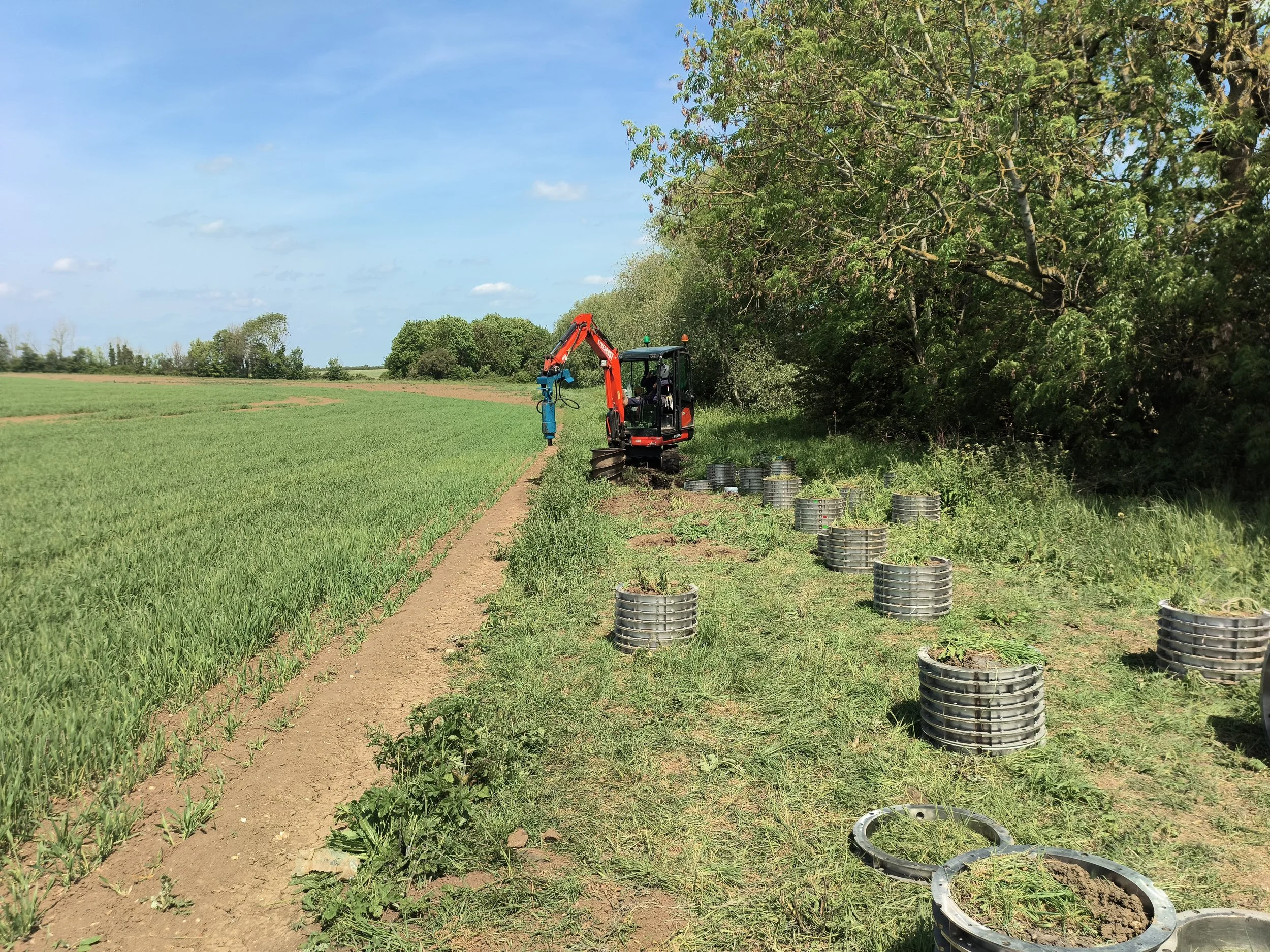
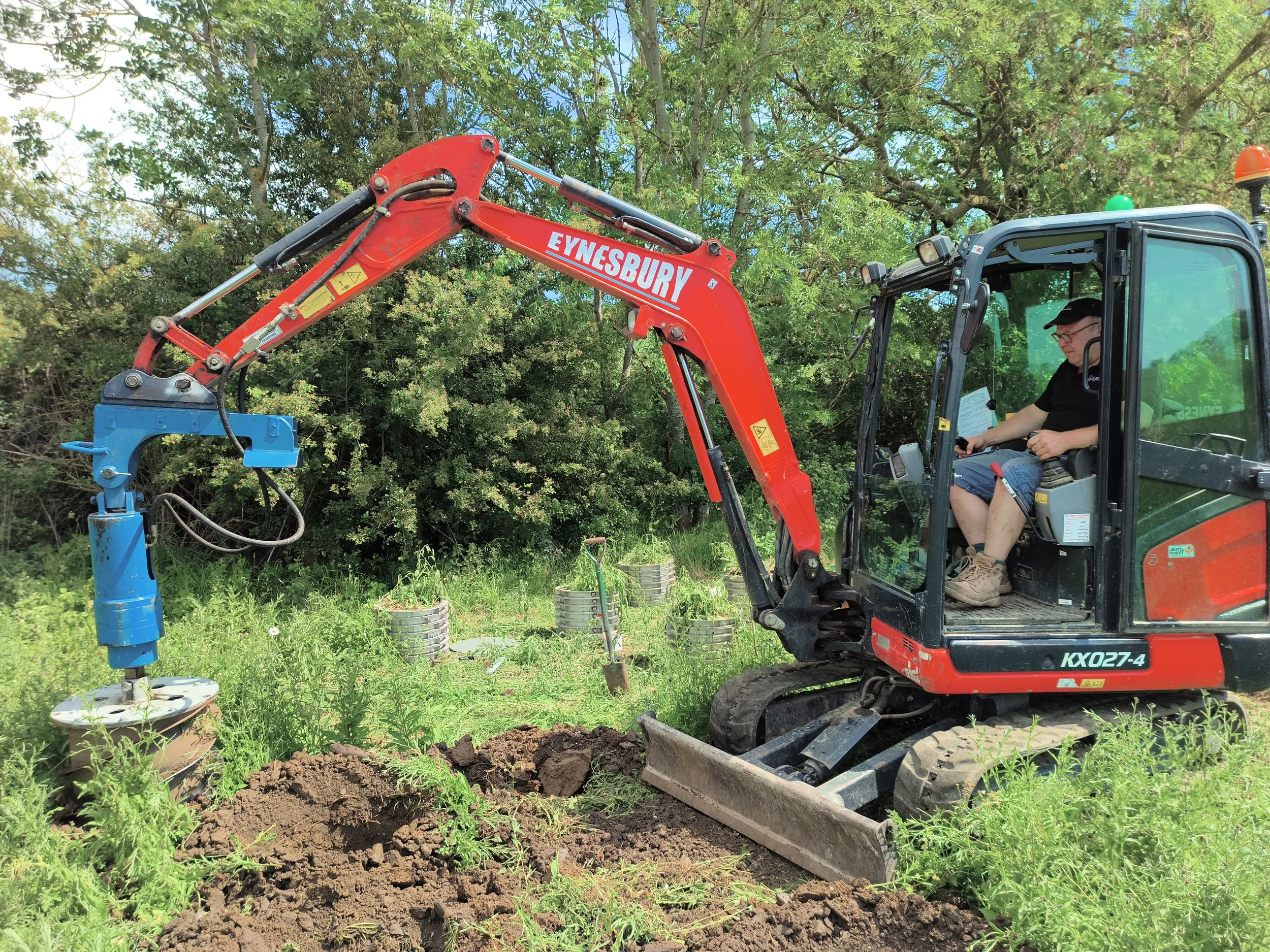
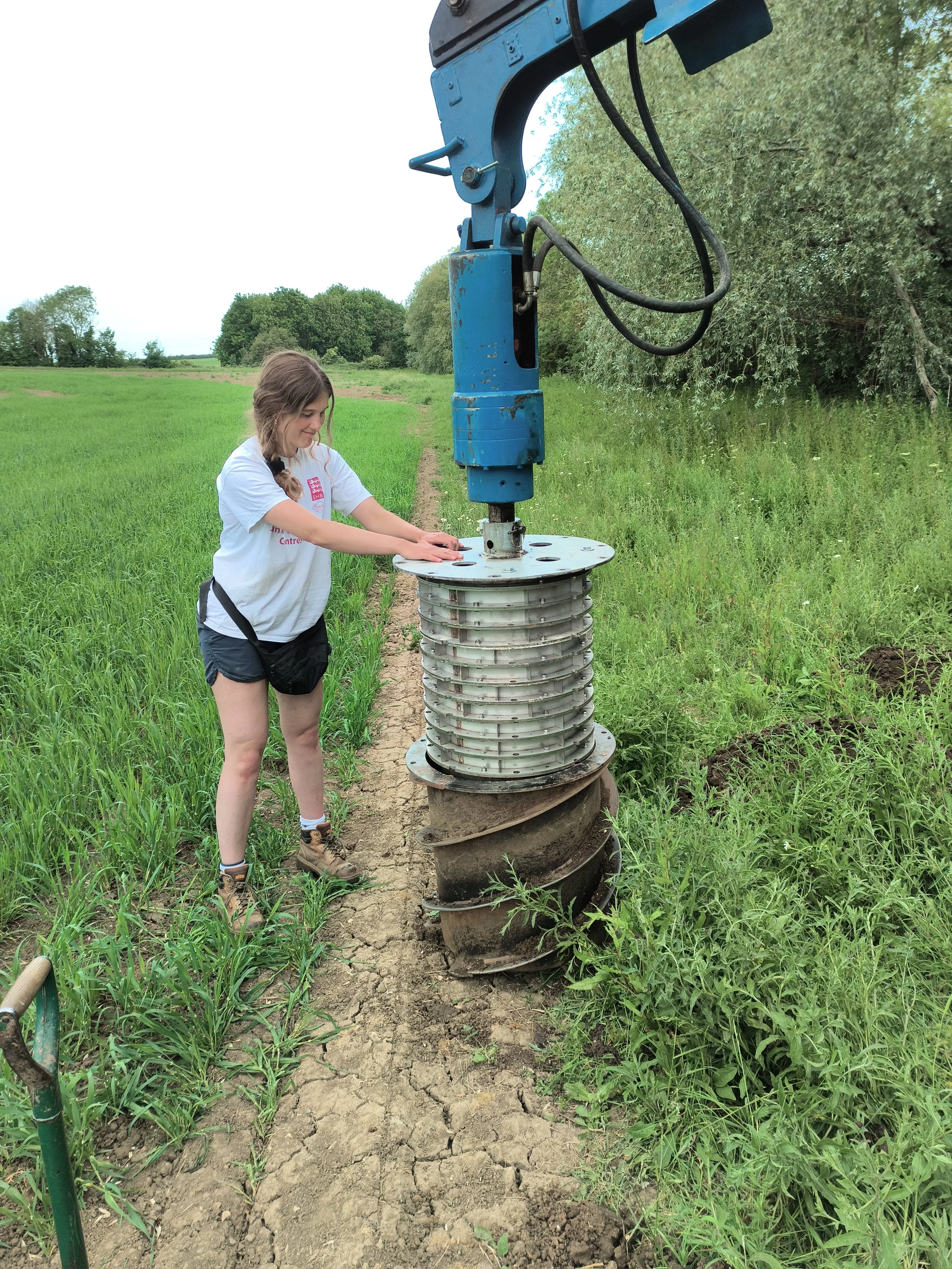
To do this, they extracted soil samples called "mesocosms" using a custom drill attached to a digger, kind of like a giant cookie cutter for the landscape. They punched out soil samples from a field margin at Hope Farm, keeping the vegetation, roots, soil invertebrates, and soil structure completely intact.
Why is this important? Field margins are usually hard to study in a controlled environment because they contain complex communities of plants and small creatures like insects, spiders, and snails. The plant and soil community extracted by the team was over 15 years old!
→ Watch this video to see how the soil core extraction looks:
With this method, the team can combine the realism of an intact field margin community, complete with natural soil structure, with the controlled exposure levels they can get applying pesticides back in the lab.
The experiment looks at "mixture toxicity" or how different chemicals work together to affect organisms. Specifically, the UKCEH team is studying how applying fungicides to field margins influences diversity in soil microbes. To measure this, they use a genetic technique called metabarcoding to compare the soil before and after applying different combinations of fungicides.
Soil microbes play a crucial role in nutrient cycling, decomposition of organic matter, and supporting plant health. One teaspoon of topsoil contains about 10,000 different species.
What is metabarcoding?
Metabarcoding is a genetic technique that allows scientists to identify multiple species within a single environmental sample simultaneously, by analysing mixed DNA or RNA. Unlike traditional DNA testing that looks at one species at a time, metabarcoding can quickly identify hundreds of species at once. This makes it ideal for studying complex environments rich in organisms, such as soil or water, where traditional isolation methods would be impractical.
The UKCEH team is studying field margins because in theory, they can be a home to many different species. However, because these margins lie directly next to crop fields, pesticides often reach them during routine spraying. When farmers use multiple pesticides over time, their combined effects can interact unpredictably, creating mixture toxicity.
Hope Farm is a conventional farm managed by the Royal Society for the Protection of Birds (RSPB) to demonstrate how modern agriculture and wildlife conservation can successfully coexist. The farm uses standard fungicides (such as azoles and strobilurins) to manage crop diseases, but selects only compounds that break down quickly in the soil within a few weeks. For example, they chose not to test a newer fungicide called isoflucypram because it remains in the environment for over 400 days. While combining isoflucypram with other treatments helps prevent disease resistance in crops, its long persistence in soil does not align with Hope Farm’s environmental principles.
The results are pending. Study leader Alex Robinson highlights the project's novelty: “This is the first time realistic mesocosms have been used to study the effect of fungicide on natural field margin communities.”
Stay tuned to the SYBERAC website to follow future updates and findings!
[1] Source: https://www.ceh.ac.uk/our-science/case-studies/case-study-why-do-soil-microbes-matter
Gallery